
24 March, 2026
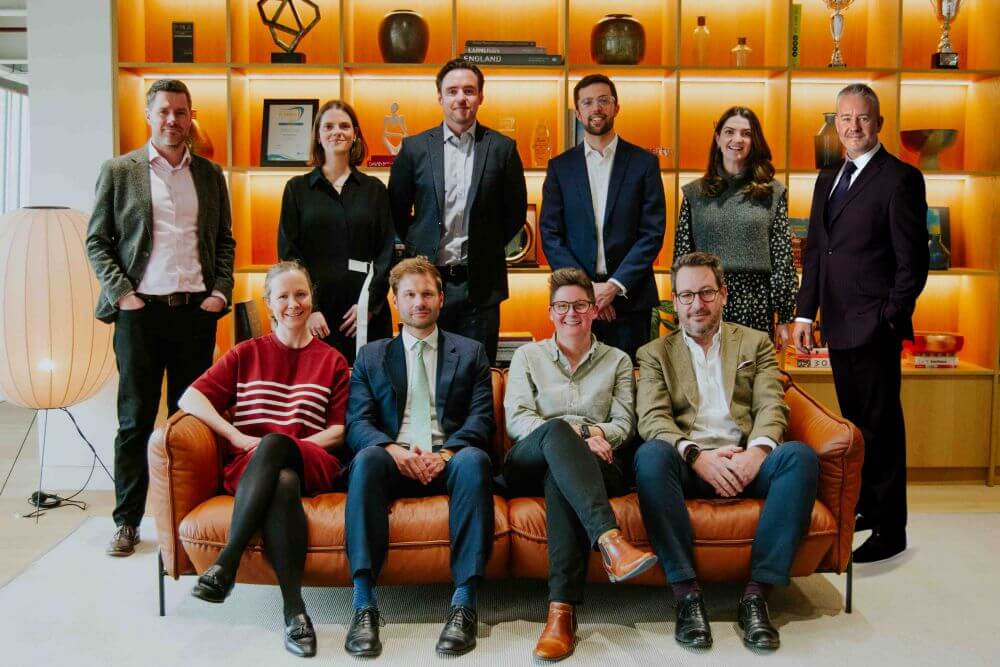
Montagu Evans celebrates growing Partner numbers in largest ever promotion cohort
Learn more
4 March, 2026 · 4 min read
Regeneration schemes are uniquely exposed to today’s volatile economic and political landscape. Their scale and cost demand partnership between the public and private sectors, but there’s no single model for how responsibility and risk should be shared.
That’s precisely the focus of our short video and article. Tracing the relationship between the two sectors from the 1980s to today, we revisit the past to unlock the future and offer suggestions for reviving urban regeneration beyond 2026.
In 1964, sociologist Ruth Glass observed young people renovating dilapidated Georgian houses in Islington, then a run-down area. She described this process as ‘gentrification’.
Almost two decades later, London’s booming financial industries accelerated this process, while the economic and social deprivation of the ‘inner cities’ became a recognised problem. In response to these, government policy shifted from suburban development towards urban revitalisation.
That’s how the Urban Development Corporations emerged. These government-backed bodies held financing, land assembly, and CPO powers, all aimed at preparing sites for private-sector development. UDCs were praised for their swift delivery and ability to attract investment. However, they faced criticism for sidelining local communities, who often saw limited social and financial benefits.
In 1994, John Major’s government introduced the Single Regeneration Budget. This approach brought together fragmented programmes and supported projects such as Deptford’s regeneration.
Fast forward to 1997, New Labour came to power, and urban regeneration moved to the top of the policy agenda. The Urban Task Force set out a bold vision: denser, walkable cities, vibrant public spaces, and integrated transport systems.
Planning policy tightened, with greenfield development facing stricter controls. Meanwhile, the economy was thriving, and private sector-led projects were actively encouraged. Naturally, this fuelled a wave of investment.
Local authorities provided vision and masterplanned sites through vehicles such as Urban Regeneration Companies, with development then largely executed by the private sector. The URCs lacked the powerful statutory tools of the earlier Urban Development Corporations, reducing their ability to produce large-scale change.
This era also saw a concentration in larger cities, while smaller towns and former industrial areas saw less activity. This disparity sowed seeds of resentment that would echo in later decades.
After the Global Financial Crisis, the coalition government was elected in 2010. Their focus on austerity slashed budgets for regeneration and affordable housing.
Simultaneously, there was a new emphasis on localism. The shift was supported by devolution to city regions and combined authorities. This led to the creation of Mayoral Development Corporations, which were tasked with delivering regeneration schemes across defined areas.
Despite limited public spending, activity continued. Ultra-low interest rates kept property development attractive to domestic and international investors.
Brexit triggered a new focus on ‘levelling up’ left-behind areas and smaller towns. However, these schemes lacked the scale and ambition of earlier programmes and thus had a limited impact.
The pandemic undermined long-held assumptions about city-centre growth, while rising inflation slowed investment. Between the start of 2022 and the end of 2024, build costs increased by 28% for residential and 24% for commercial. This made many projects unviable.
With market conditions still unfavourable to private-sector investment, it’s clear that the public sector holds the key to kick-starting activity. The government needs to develop a vision for a new urban renaissance, one that recognises the importance of cities and city centres in particular.
One crucial step is to enter into equal risk-sharing partnerships with private investors. At the same time, councils and combined authorities should take a stronger lead. They need to invest early in the public realm as a catalyst, use phasing to create value, and release the smaller lots that now meet private-sector requirements. Mayoral Development Corporations could be well-suited to this role.
This is only a glimpse of our recommendations for reviving regeneration. For the detailed analysis, read our full report: Unlocking Urban Potential: The Next Phase of UK Regeneration.
To discuss what the insights could mean for you, contact Jon Neale, our Head of Research and Insight or speak to the wider Montagu Evans team.
Related insights
24 March, 2026
Learn more

23 February, 2026
by Jon Neale
Learn more

1 December, 2025
by Jon Neale
Learn more

4 November, 2025
Learn more