

17 April, 2026
Montagu Evans Equity Partner numbers grow with Head of Rating appointment
Learn more
3 November, 2026 · 2 min read
Businesses were again waiting with anticipation for this month’s Budget, where the Chancellor, in stating this budget as focussed on fiscal discipline, set out several measures to support the UK economy over the forthcoming 12 months.
As ever, Business Rates were a central feature of the Budget. However, changes were for the most part anticipated. Aside from an inflationary increase to the annual multipliers from April next year, most announcements around rating focussed mainly on the Retail Hospitality and Leisure sectors (RHL).
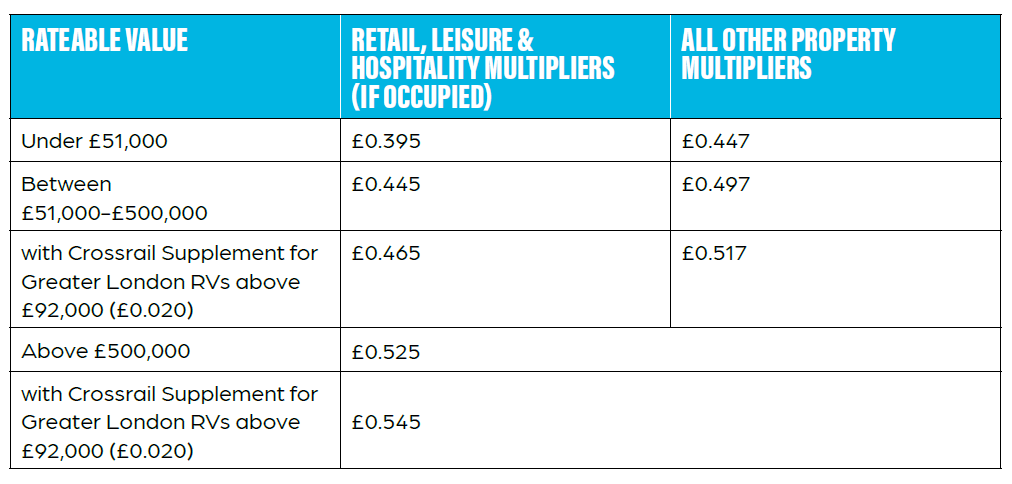
From 1st April 2027 the total annual tax take from business rates will increase £1.1bn from £35.8bn in 2026/27 to £36.8bn in 2027/28. The main driver for this is the full 3.5% inflationary increase to the rates multipliers (as per CPI inflation in September 2026). Although this was expected and is in line with what the legislation dictates the government could have considered intervention to cap the rising cost pressures on businesses, particularly as CPI had been tracking at 2.5%-3% for the year up to August.
In addition to the 2027/28 multipliers set out here, there will be an extension to the 1p transitional relief supplement for an additional two years to the expiry of the current Rating List, payable by those whose liability is not capped by the upward transitional scheme. The City of London supplement is to be confirmed.
For occupiers of smaller Retail Hospitality and Leisure (RHL) premises the threshold for 100% Small Business Rate Relief (SBRR) will increase in April from RV £12,000 up to RV £18,000 and this is expected to result in over 50% of shops restaurants and gyms paying nothing in rates. There will be tapered relief to RV £21k.
However, those businesses occupying premises within the extended RV threshold but outside the RHL sectors will likely feel aggrieved by the Chancellor’s announcement, which is yet more tinkering around the edges of a system in need of more fundamental reform.
The criteria for SBRR relief is already arbitrary, being based on the Rateable Value of property occupied rather than business need. The extended relief is said to be funded by a rise in tax on gambling, with adult gaming centres in England excluded from RHL multipliers and vape shops in England excluded from RHL multipliers and Small Business Rates Relief from April 2027.
As well for qualifying RHL properties in England, the government is freezing real term rates bill increases by capping in line with CPI inflation in 2027/28 and 2028/29. The result of which ought to prevent what might otherwise have been a considerable leap in liability for those coming out of SSBR (additional transitional relief) as a result of the loss of Retail Hospitality and Leisure relief at expiry of the previous, 2023 Rating List.
The expected additional 20% relief for pubs, social clubs and live music venues was also confirmed. This relief is in addition to the 15% previously applied from April 2026, but will exclude the largest live music venues, with a Rateable Value of £1 million or above. These venues will however see a freeze in their liability during 2027/28 and 2028/29. The level of relief will be reviewed at the next revaluation, planned for April 2029.
Finally there has been a further commitment to rates retention, with Mayors keeping 20% of locally collected rates from next year and a commitment to local and regional government retaining 100% of all business rates collected by
the end of this decade. The detail around any redistribution among Billing Authorities has yet to be confirmed.
In light of the Budget we would encourage businesses to review their liabilities, which will increase for the majority by at least 3.5% from April next year. Montagu Evans are best placed to assist and provide early advice as to how best to mitigate.
Related insights
17 April, 2026
Learn more

26 November, 2025
by Josh Myerson
Learn more
19 November, 2025
by Josh Myerson
Learn more

22 October, 2025
by Mark Paterson, Julie Chalmers
Learn more